How Long Does Corporate Video Production Take in South Florida?
Corporate video production in South Florida usually takes three to six weeks from brief to final cut. Here is what sets the timeline and what stretches it.
Key facts
- Most corporate video production in South Florida runs three to six weeks from an approved brief to a final cut.
- The shoot is one day of that window. The rest is planning before it and editing after it, and a script approved late is the biggest cause of a blown timeline.
- A corporate explainer or brand film falls in the $3,500 to $8,000 range at Mile 1 Media, with the timeline set by review rounds, not budget.
- Last reviewed September 7, 2026.
How long corporate video production actually takes
A standard corporate video takes three to six weeks from the approved brief to the final cut, with a single shoot day in the middle. A one-location piece with a locked script can land in two to three weeks. A multi-location project with several interviews, motion graphics, and a wide review group runs six weeks or longer. The camera work rarely sets the schedule.
We are Mile 1 Media, a video production studio in Palm Beach Gardens that builds monthly video systems and one-off shoots for businesses across South Florida. The question we get most before a project starts is when the video will be ready, and the answer is how fast the client side makes decisions, not the footage. For the full scope a corporate video production engagement covers, that page lays it out before you set a date.
One project shape shows up often, and we use it below: a Palm Beach County professional-services firm that wants a two-minute homepage explainer plus shorter cutdowns for social.
Where corporate video timelines actually break
The four places a corporate video runs long tell you more than a day-by-day calendar, and none of them is the shoot.
| Phase | Typical time | What stretches it |
|---|---|---|
| Discovery and brief | 2 to 5 days | Script sign-off waiting on one busy approver |
| Pre-production and scheduling | 3 to 7 days | Aligning stakeholder calendars and location access |
| Shoot day | 1 day | Adding locations or interview subjects late |
| First edit | 5 to 10 days | Footage volume and motion graphics build |
| Review and revisions | 3 to 10 days | Reviewer count and rounds with no cap |
| Final delivery and versions | 1 to 3 days | Extra aspect ratios and captions requested at the end |
1. The script gets approved late
This one moves the whole schedule. Our example firm needs a script signed off before anyone books a camera, and when that takes an extra week, the shoot and everything after it slide with it. A clear brief is the fastest way to protect the date, which is why we walk clients through how to write a video brief before we quote a timeline.
2. Too many people review the cut
Two reviewers give feedback in a day. Six argue with each other for a week while the edit waits. On the professional-services explainer, the timeline held because one person owned the final yes. We run rounds inside a shared review tool like Frame.io so comments land in one place with a timecode attached, but it cannot decide for a group that has not agreed on the goal.
3. Revisions run without a cap
An edit can always be changed again. Without a set number of rounds, a corporate video can sit in review for a month while small preferences get swapped in and out. We build in two rounds by default and name that in the scope, so the finish line is a date instead of a feeling.
The edit itself is quick once the direction is settled. We cut in a tool such as Adobe Premiere Pro, and that step is rarely where good projects lose their weeks.
4. The scope grows after the shoot
A request for aerial coverage or a second interview after the shoot day means going back out with a crew, and that resets part of the clock. Aerial work carries its own weight, because a pilot flying commercially operates under the FAA rules for commercial drone flight, and coastal weather does not always cooperate. Extra cuts and captions requested after the final approval add a pass too, so deciding every deliverable before the shoot keeps the timeline whole.
Quotable: The clock on a corporate video does not start when the camera rolls. It starts the day the script gets approved.
How the timeline meets your video production pricing
Budget and schedule are related, but not the way most people assume. A bigger budget buys more production value and more finished versions, but it does not buy back the days a slow approval costs you. On our published video production pricing, a corporate explainer or brand film sits in the $3,500 to $8,000 range, and a monthly content system runs $3,200 to $6,500 per month. The monthly system ships each new video faster, because the review rhythm is set once and repeats.
What full-service video production services do to protect the date
A studio that handles the whole job, from brief to delivery, removes the handoffs that leak time. When script, shoot, edit, and captions live under one roof, no one waits on a freelancer to send footage to a separate editor. That is the practical case for our video production services running as one system rather than stitched together from vendors. The tradeoff is honest. A single studio has a booked calendar, so the soonest shoot day may be a week or two out, and a larger agency with more crews can sometimes start sooner when a client has a hard deadline we cannot meet.
Turning the corporate shoot into social media video production
Most timeline pressure comes from treating the corporate video as one deliverable. One shoot day can feed a month of shorter cuts, and planning those from the start adds almost nothing to the schedule. Our social media video production is usually built off the same footage as the main piece, cut vertical for the feed and captioned for silent viewing.
Publishing those cuts out over weeks on a platform such as YouTube and the short-form feeds keeps a single filming day working long after the crew packs up.
For the shoot day itself, we break down what happens on a shoot day, hour by hour.
Decision rule: when to rush and when not to
If the video has a fixed outside deadline, lock the script two weeks before the shoot and cap the review at two rounds, and the three-to-four-week path holds. If the date is flexible, the timeline follows the calendar of whoever approves the cut, so the fastest thing you control is naming one decision-maker. A rush makes sense for a dated event or a booked campaign. It is the wrong call for a video meant to represent the brand for two years, because the day saved by skipping a second review is the day that catches the flaws a permanent asset should not carry.
Who a fast turnaround is wrong for
Mile 1 Media is not the right fit for a business that needs a finished corporate video in three days and has not written a brief, because a piece with interviews and graphics cannot be compressed that far without the quality showing. We are also wrong for a company that wants open-ended revision rounds, since our schedule is built around capped rounds so every client's date stays predictable. A shop that bills hourly and revises indefinitely suits that style better.
Questions to ask any video production company
These four questions separate a studio that will hit your date from one that drifts past it.
- What sets my timeline, and what could stretch it? A strong answer names script approval and review rounds. A red flag is a fast date promised without asking who signs off.
- How many revision rounds are included? A strong answer gives a number and puts it in the scope. A red flag is unlimited revisions, which quietly removes any finish line.
- Who edits the footage, and where? A strong answer is a named editor on the team. A red flag is a chain of freelancers you never meet, each one a place the footage can wait.
- What do you need from us, and by when? A strong answer is a short list with dates. A red flag is silence, which means the delays land on your side.
Trust band
This guide was written by Reagan Cotton, owner of Mile 1 Media, a video production studio in Palm Beach Gardens, Florida that runs corporate shoots and monthly content systems across South Florida. The timelines here come from the projects we schedule and deliver, not from a template. Last reviewed September 7, 2026.
Frequently asked questions
How much does the timeline add to the cost of a corporate video?
Very little on its own. Cost is set by production value, the number of locations, and how many finished versions you need, not by how many weeks the project runs. Schedule and cost only meet on a rush that needs overtime crew or expedited editing.
Can you deliver a corporate video in a week?
Sometimes. A single-location piece with an approved script, one interview, and no motion graphics can move from shoot to final cut inside a week. The week disappears the moment a script needs sign-off, a second location is added, or the review group grows past two people.
What is the fastest part to get wrong and slow everything down?
The brief. A vague brief produces a script that changes after people see the first cut, and that is the most expensive change because it can mean reshooting. Agreeing on the goal before the shoot is the cheapest time in the project.
Do more revision rounds mean a better video?
Usually not past the second round. The first round fixes real problems and the second polishes. Rounds after that tend to swap one valid choice for another and rarely improve the result, while they always cost days.
Does an ongoing monthly plan deliver faster than one-off projects?
Yes, after the first month. A monthly content system sets the planning, shoot, and review rhythm once, so each new video reuses decisions already made instead of starting from a blank brief. The first project runs a normal timeline, and the ones after ship faster.
Related reading
- What Does a Corporate Video Cost in Palm Beach County? (2026 Pricing). The budget side of the same decision.
- How to Turn One Shoot Day Into a Month of Video Content for South Florida Businesses. How the planning that protects your timeline multiplies what one shoot produces.
- Corporate Video vs Commercial: Which One Does Your South Florida Business Actually Need?. Pick the format before the date, because the two run on different timelines.
What happens when you call
Here is how a corporate video starts with us.
- A discovery call of about 20 minutes covers the goal, the deadline, and who signs off on the final cut.
- Within a couple of days we send a brief and a timeline built around your date, so you see every phase up front.
- Once you approve the script, we book the shoot day and lock the review rounds, and the clock above starts running.
If you have a date in mind and want to know whether it is realistic, book a discovery call and we will map the timeline against it before you spend a dollar.
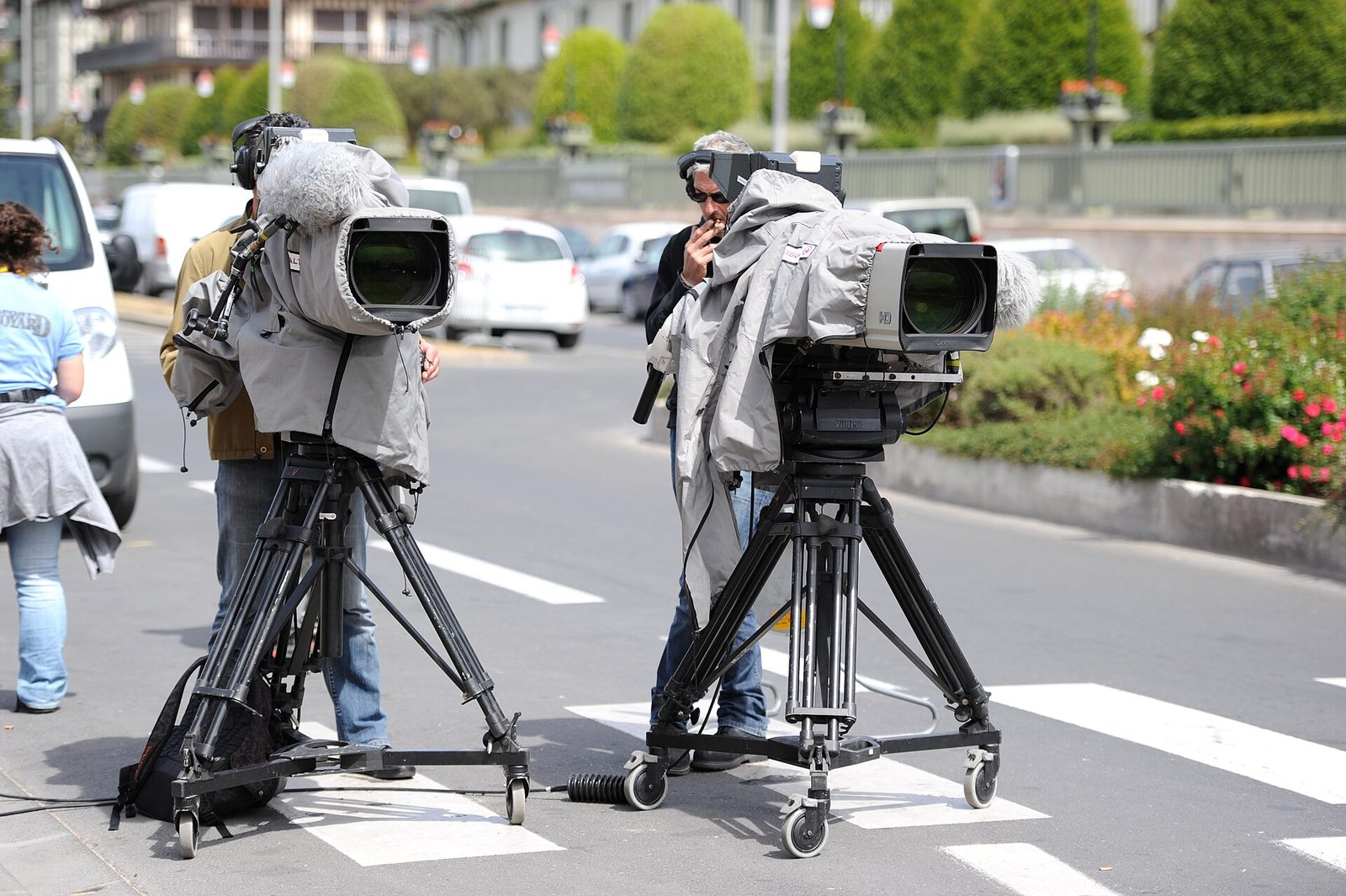
Photo by Guillaume Paumier on Wikimedia Commons, licensed under CC BY 3.0.
Keep reading

Ready to put video to work for your business?
Mile 1 Media plans, shoots and edits video for South Florida businesses. Tell us what you are trying to achieve and we will map out the shoot.
Book a free discovery call