How to Turn One Shoot Day Into a Month of Video Content for South Florida Businesses
How Mile 1 Media plans one shoot day so a South Florida business gets a full month of usable video for social, web, and email.
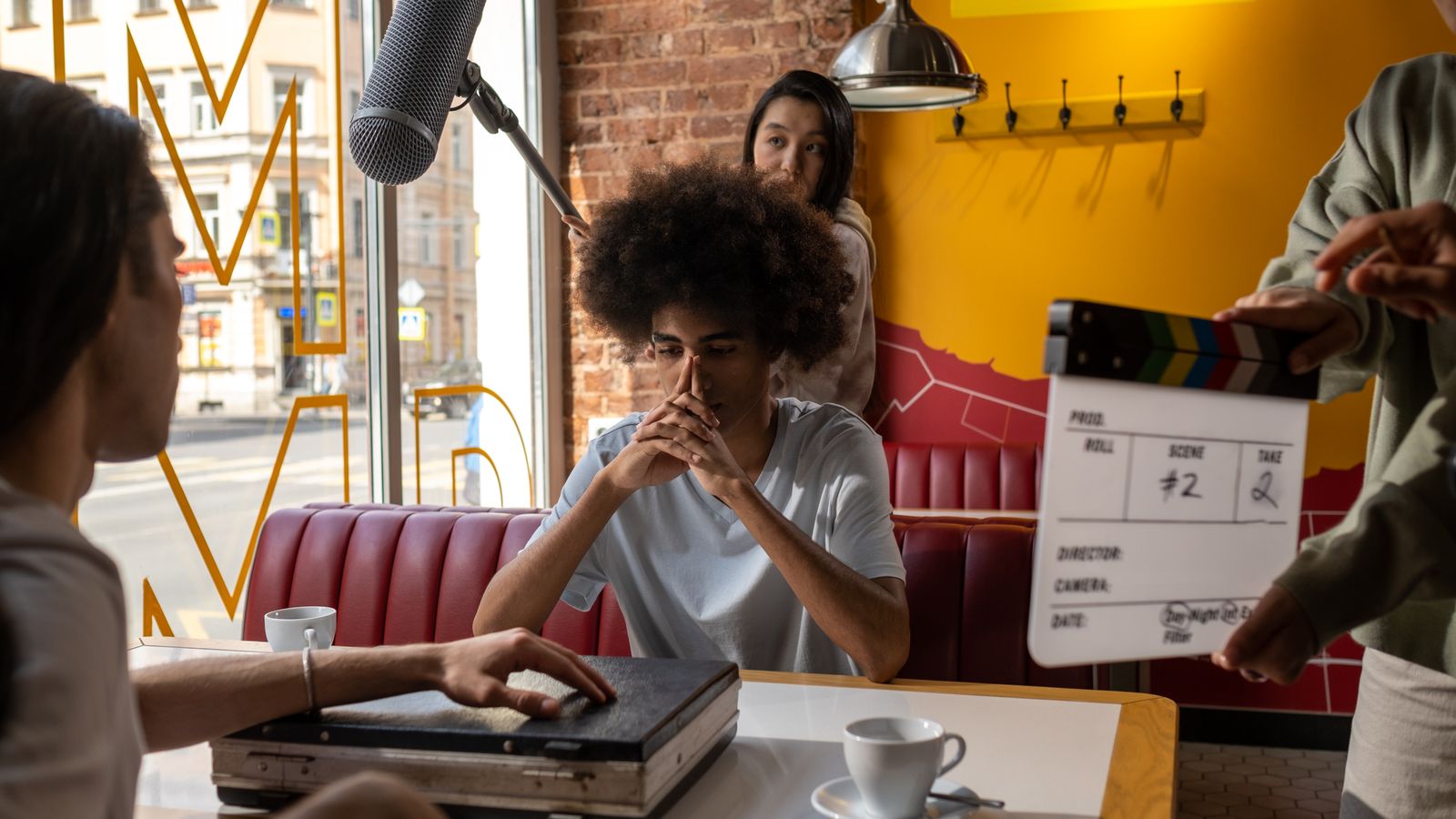
"A month of content from one shoot day" gets used two ways. To marketing agencies it means volume, thirty short clips cut from a Reel timeline. To a business owner it usually means presence, showing up in front of the right buyer often enough that they remember you when they need what you sell. Those are not the same job, and shooting for the first rarely produces the second.
Mile 1 Media is a video production studio in Palm Beach Gardens that builds monthly video systems and one-off shoots for service businesses and hospitality brands across South Florida. The same pattern turns up on almost every discovery call: a business paid for a shoot, got a folder of clips back, posted them, watched the numbers stay flat, and concluded video does not work for them. The shoot day was not planned around what the business needed to say, so the finished pieces had no audience.
This piece walks through what Mile 1 Media does to turn one shoot day into a real month of video, and where a batch shoot is the wrong answer.
Last reviewed: September 3, 2026.
The short answer
A planned shoot day yields about 20 to 30 finished pieces across a month: one longer anchor video, 6 to 10 short social cuts, 4 to 8 vertical clips for Reels and TikTok, 2 to 4 photos, and enough B-roll to power the following month too. The pieces work only when the shoot was planned around a specific message and a specific audience before anyone showed up with a camera.
Three things decide whether the month works. A written brief before the shoot. An anchor piece the shorter pieces are cut from. A publishing calendar that puts each cut in front of the audience most likely to watch it. Miss any of those and the shoot returns a folder of clips instead of a month of content.
The strategy that decides what gets shot
Before Mile 1 Media quotes a shoot day, the planning call produces the same three answers. What one question is this month trying to answer for your buyer. What would a person need to see or hear to believe the answer. Where do those people already spend their attention. The media strategy is those three answers written down in a short brief the crew reads before the day.
The brief lists the anchor topic, the interview questions in order, the B-roll shots that support the topic, and the platforms the cuts are going to. It also lists what will not be shot. There is more on the brief in how to write a video brief that gets the video you pictured.
Quotable: A shoot day produces a month of usable video when the brief was written before the crew arrived, not when the editor was asked to salvage what got filmed.
What actually happens on the day
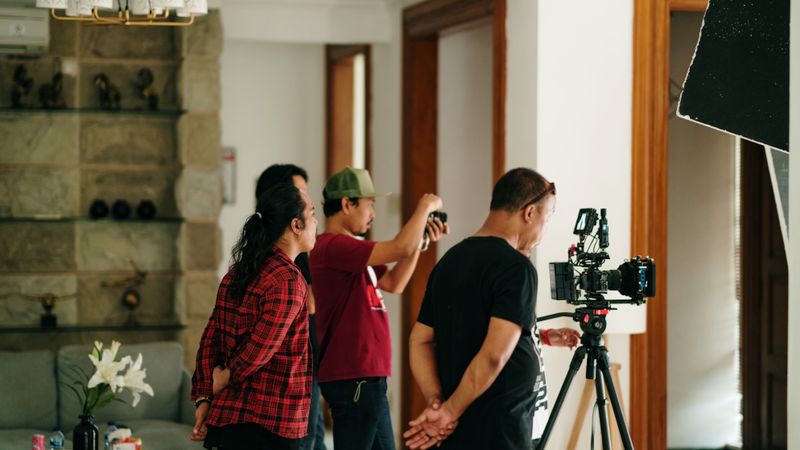
A one-day shoot for a monthly system runs 8 to 10 hours and breaks into four or five distinct segments:
- One long-form interview on the anchor topic. 20 to 40 minutes of usable talking in a stable setup.
- Two to four short prompted answers to specific sales questions, shot in the same look and framed for vertical.
- B-roll of the work being done, filmed with the cut in mind. Each shot is captured for a specific piece it will support.
- Two to four posed and candid photos for LinkedIn, the website, and press.
- A hook segment where the on-camera person delivers 10 to 15 pattern interrupts that get spliced onto the front of the shorter clips.
Order matters because of failure mode. If the interview is rushed to fit the B-roll in, the anchor piece falls apart and the month goes with it. Mile 1 Media shoots the anchor first, and everything else fits around it. More detail in what happens on a shoot day, hour by hour.
How one shoot day becomes 20 to 30 pieces
The annotated checklist below is what Mile 1 Media runs against every shoot.
- Anchor video, one piece. The 3 to 6 minute cut of the interview, published on YouTube or the website. It is the source of truth every shorter piece points back to.
- Sub-cuts, two to three pieces. 60 to 90 second clips, each answering one buyer question in full. LinkedIn, the website, and email do better with a piece long enough to make an argument.
- Short social cuts, six to ten pieces. 15 to 45 second cuts with captions burned in. This is where reach happens on Instagram and TikTok.
- Vertical talking-head clips, four to eight pieces. Shot vertical on the day. Cropped horizontal video reads as cropped, and the platforms downrank it.
- Photo posts, two to four pieces. Stills from the shoot, sized for the platform they will run on.
- Leave-behind edit, one piece. A 90 to 120 second cut for the sales team to send in follow-up email.
- B-roll library, one folder. Tagged clips filed in a shared folder the client pulls from between shoots.
A shoot that finishes with 40 tagged, searchable B-roll clips leaves fewer excuses to skip a week the following month, and a slow South Florida summer is the right stretch to build that library before winter demand climbs.
Where each piece lives on social
Cutting for the platform is where good social media video production separates from bad. The same 40 seconds of interview footage does very different things in different feeds.
- Instagram Reels. Vertical, captions burned in, hook in the first two seconds. The Instagram Reels specifications reward vertical native cuts and downrank cropped horizontal video.
- TikTok. Similar aspect ratio, with a longer tolerance for a slow-build hook if the payoff arrives inside the first eight seconds. The TikTok Business library keeps current guidance on length and captions.
- YouTube. The anchor runs horizontal at 1080p or higher. Shorts get their own vertical cuts. YouTube's upload specifications are the source of truth for aspect ratio and length caps.
- LinkedIn. A square or vertical cut of a sub-cut lands better than the short social version. LinkedIn's native video guidance covers current specs.
- Website and email. The anchor embedded on a service page, and one leave-behind cut in the sales team's outbound. Hosting on Vimeo keeps a recommended-videos rail off the page after playback.
A single 45 second interview clip therefore appears in three edits: a vertical Reel, a square LinkedIn post, and a longer embed on the website. Same source, three finished pieces.
A realistic look at video production pricing
Monthly systems and one-off shoots price differently, and both live on the video production pricing page. A monthly content system runs $3,200 to $6,500 per month. One-off pieces price by category: brand films $3,500 to $8,000, commercials $5,000 to $15,000, event coverage $3,500 to $7,000, testimonials $1,500 to $3,500, aerial and drone $800 to $2,000, corporate photography $1,200 to $2,500, and podcast production $1,000 to $2,500. A one-day shoot inside a monthly system covers the day plus the finished pieces for the following month.
Stake in one clause: Mile 1 Media sells monthly systems. That is the right answer for most service businesses that need to publish weekly, and it is the wrong answer for a business that needs one polished piece a quarter for a trade show. The trade show piece is a brand film, and pricing it against a retainer overstates what the business needs.
When one shoot day is not enough
The math breaks in specific ways. Naming them keeps the honest cases separate from the shortcut cases.
- Multi-location coverage. A business with three showrooms cannot be filmed in one day without shortcutting each one.
- Weekly message changes. If the promotion or angle shifts every 7 to 10 days, a batch shoot goes stale halfway through the month.
- Cold on-camera subject. A rehearsal shoot the week before tends to be cheaper than salvaging stiff footage in the edit.
- Proof over talking. Sales won by a walkthrough of a real installation, or a real client speaking to camera, have to be filmed where the work happens.
- Single hero video. Cutting a month of social from a commercial or brand film shoot cheapens the hero piece.
Where any of these apply, some months are better served by a freelance videographer or a smaller local crew, and the fair answer is to route the work there.
Trust band
Author: Reagan Cotton, owner of Mile 1 Media. Studio: Mile 1 Media, video production in Palm Beach Gardens, Florida, serving South Florida from Jupiter to Miami. Last reviewed: September 3, 2026.
Frequently asked questions
What happens if the on-camera person is stiff and the interview does not land?
The shoot day gets restructured on the fly. The producer moves the interview later and shoots B-roll and photos first, so the subject has 60 to 90 minutes of camera time before the anchor take. If it still does not land, the anchor budget shifts to a written-script format the subject reads to camera, and the shorter pieces cut around a voiceover.
What happens if a platform changes its aspect ratio mid-month?
The pieces already running keep running. Pieces still in the pipeline get re-cut to the new spec. Source files stay at native resolution and the burned-in caption pass is a separate step, so re-cutting five short pieces is a few hours of edit time.
What happens if the client cannot publish the pieces themselves?
Mile 1 Media schedules and posts them. Publishing is included in the monthly system. For one-off shoots it is a separate line item, usually a few hundred dollars a month depending on platform count.
How do you measure whether the month worked?
Views and watch-through come out of the platform analytics. Inbound has to come from the client: discovery calls, quote requests, and booked appointments that cite the video. Mile 1 Media asks for that number monthly. Without it, the analytics report says which pieces got attention, not which pieces produced revenue.
What happens if a piece bombs?
The piece is a data point. A short social cut that gets 200 views when the average is 2,000 says the hook, the topic, or the placement was wrong. That feeds back into the next brief, which usually changes one variable at a time.
Can we film at our office or does it have to be a studio?
Either works. Offices are cheaper and read as real, and a Delray Beach restaurant kitchen or dining room often films better than any studio backdrop. A studio earns its cost when the finished piece has to look commercial grade. For a monthly system Mile 1 Media usually shoots on-site.
Related reading
- Five Types of Video Every South Florida Business Needs. The five formats a shoot day can produce at least one of.
- Six Reasons Your Video Isn't Getting Views, and How to Fix Each One. The failure modes to check before blaming the shoot.
- Video Production Retainer vs Per-Project: A Year Compared. The pricing math on which model produces a month of content most cheaply.
A real month of video from a single shoot day is decided by the planning done before the crew shows up. Get the brief right and 30 usable pieces come out of it easily. Get it wrong and 60 minutes of interview footage produces almost nothing worth publishing. Book a discovery call with Mile 1 Media and we will walk through what your next month of video would look like.
Keep reading
Ready to put video to work for your business?
Mile 1 Media plans, shoots and edits video for South Florida businesses. Tell us what you are trying to achieve and we will map out the shoot.
Book a free discovery call